July 17, 2026
The 10 Most Common Mistakes When Buying Walkie-Talkies for a Business

When a company decides to implement a two-way radio system, it’s common to focus on the price or the power of the equipment. However, choosing the right two-way radio involves much more than that. The industry, the work environment, and the actual communication needs will make the difference between a wise investment and a constant source of problems.
Here are some of the most common mistakes made when purchasing walkie-talkies for a business —and tips for avoiding them.
1. Choose the same equipment for any sector
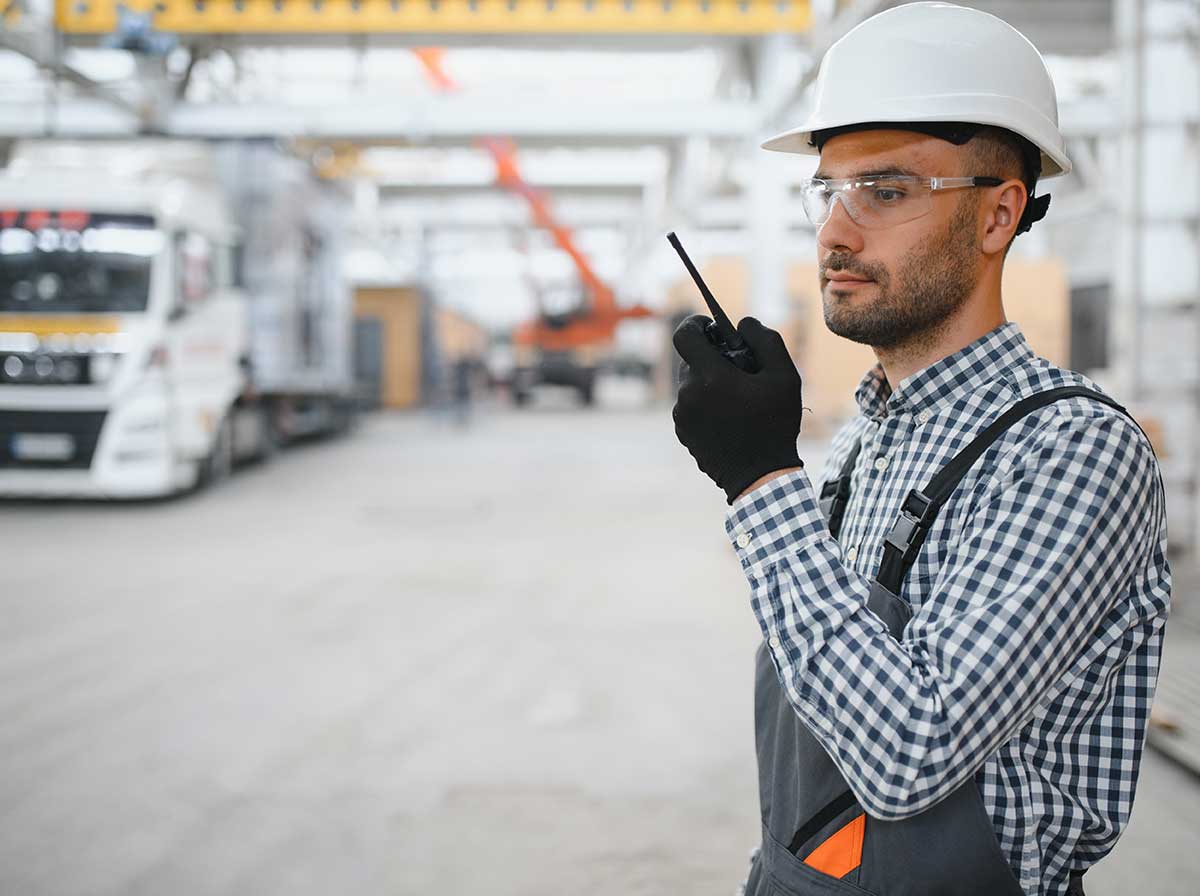
Not all companies operate under the same conditions. A restaurant, a logistics warehouse, a security service, or an airport all have completely different needs.
In the hospitality industry, for example, it’s important to have solutions that allow for communication without interrupting work. Devices such as the Dynascan CHEF-1, with an external hands-free foot pedal, are specifically designed to improve coordination between the kitchen and the dining room quickly, efficiently, and hygienically.
In retail stores, shops, warehouses, or service sector businesses, the priority is usually to have equipment that is lightweight, unobtrusive, and easy to use, such as the Dynascan 3A.
On the other hand, in specialized professional sectors such as aviation, equipment capable of operating in specific frequency bands—such as the aviation band—is required. In this scenario, a device such as the Dynascan AB-650perfectly meets the communication needs of ground crew and aviation professionals.
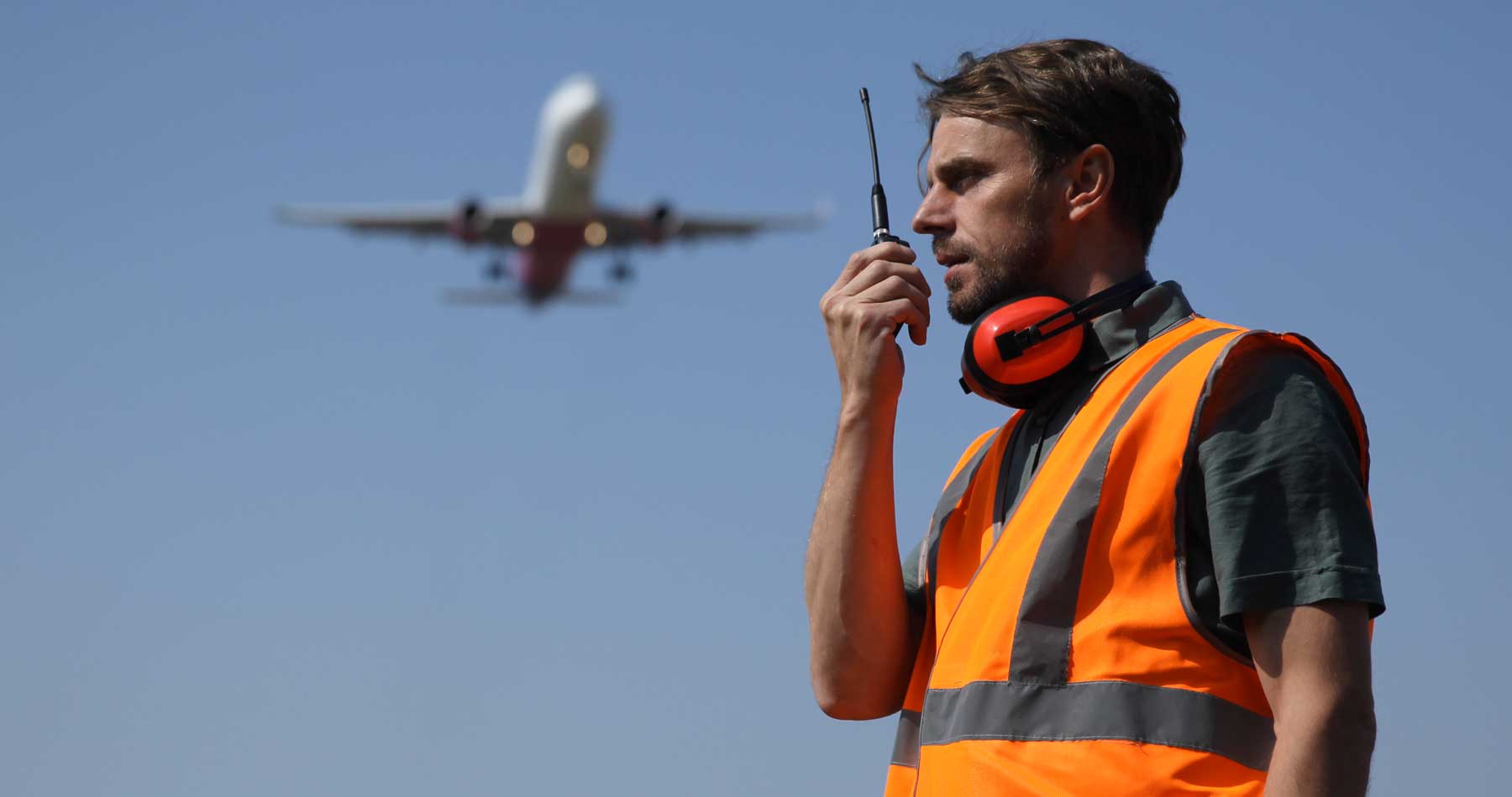
Dynascan AB650
2. Failing to value the work environment
A walkie-talkie that works perfectly in an office may not withstand daily use on a construction site, in a factory, or at an industrial facility.Ç
• Will you be working outdoors or in extreme conditions?
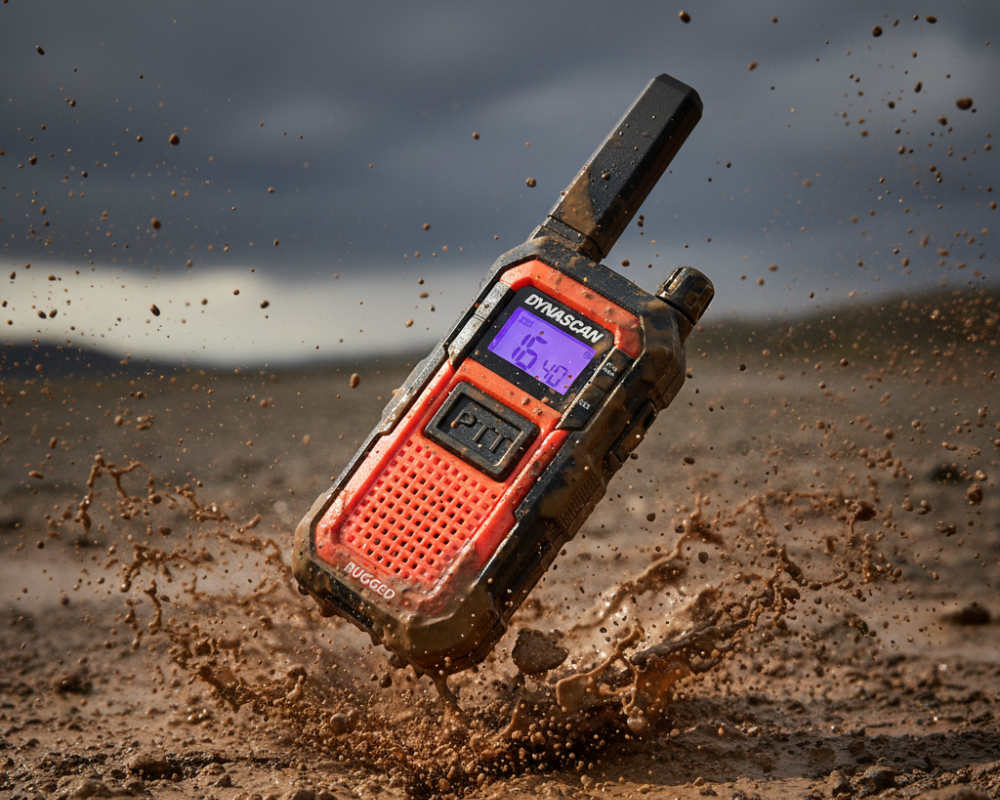
In demanding environments, it is recommended to choose equipment with protection ratings such as IP67, which offers resistance to dust and water.
The Dynascan RUGGED has been designed specifically for these types of professional applications. Its rugged construction makes it a suitable solution for sectors such as construction, industry, security, emergency services, and outdoor work.
The environment is also a key factor in outdoor activities such as hiking, mountaineering, rock climbing, and camping. In these cases, the Dynascan F-15 provides added safety thanks to its water resistance, buoyancy, and SOS button—features that are especially useful when communication can be critical.
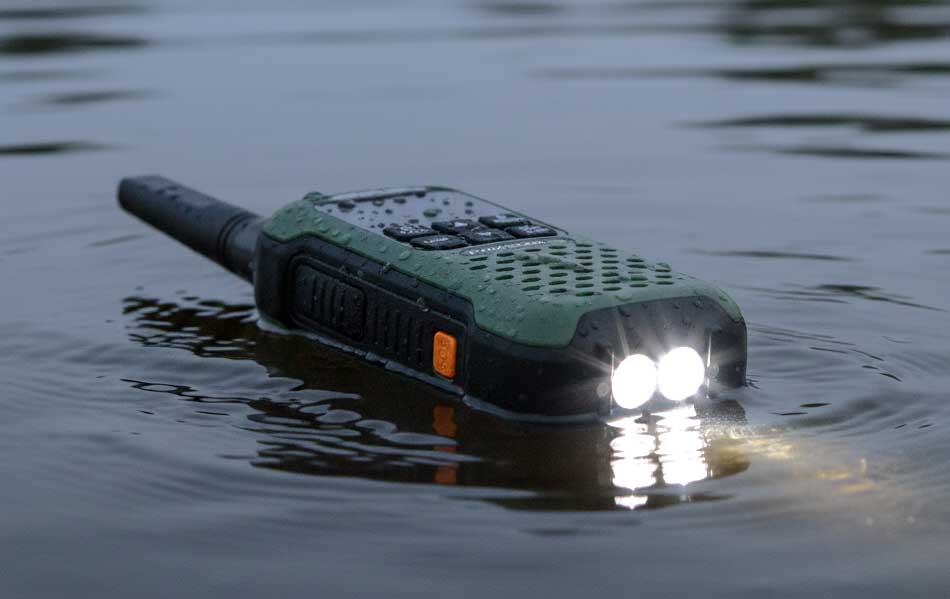
Dynascan F15
3. Thinking that more power always means better communication
One of the most common misconceptions is the belief that a walkie-talkie with higher power will always have a longer range.
The reality is that coverage depends on many factors: the terrain, buildings, walls, metal structures, vegetation, and the layout of the workspace.
In many companies, a properly selected PMR-446 system can provide excellent performance without the need for licenses. In other cases, especially when longer ranges, repeaters, or more stable coverage are required, it may be advisable to opt for professional-grade equipment that requires authorization.
The key isn't choosing the most powerful equipment, but rather the system that best suits the actual work environment.
4. Forgetting the accessories
Accessories can make all the difference in your day-to-day work. Headsets, remote microphones, multi-port chargers, spare batteries, and hands-free systems allow you to tailor your walkie-talkies to any professional activity. In the hospitality industry, for example, specific solutions such as the Dynascan CHEF-1 enable discreet, hands-free communication between the kitchen and the dining room, streamlining service.
It’s also important to consider how the devices will be charged. When a company uses multiple walkie-talkies, a multi-port charger helps keep all the devices organized, takes up less space, and ensures they’re always ready to start the day. A good example is the Jetfon Multi-CLPe, a 6-unit charger compatible with Motorola CLPe models, which is ideal for efficiently managing the daily charging of a fleet of devices.
Choosing the right accessories from the start improves productivity, makes day-to-day work easier, and extends the lifespan of the communication system.

Dynascan CHEF-1
5. Don't think about autonomy
Not all companies operate at the same intensity. While some teams work short shifts, others remain operational throughout the day or even during several consecutive shifts.
Running out of battery in the middle of a shift means losing coordination precisely when it's needed most. That's why it's important to choose a walkie-talkie with a battery life that matches the company's work pace.
It's also important to consider factors such as battery capacity, power-saving features, the availability of replacement batteries, and charging options via USB-C or multiple chargers.
For sectors such as security, manufacturing, logistics, and events—where workdays are often long and constant communication is essential—devices like the Dynascan UV-202, with up to 20 hours of battery life, make it possible to work throughout the entire day without constantly worrying about the battery level.
Its long battery life, combined with its professional design and durability, makes it an especially good choice for heavy-duty use.
6. Buying based solely on price
The cheapest equipment isn't always the most cost-effective.
A frequent malfunction, a battery that loses its charge quickly, or a device that cannot withstand working conditions can result in costs far exceeding the initial price difference.
In addition to the cost of replacement, poor communication can lead to delays, operational errors, or coordination problems.
It is also wise to be wary of excessively cheap equipment that does not clearly indicate whether it complies with European regulations. Using walkie-talkies that are not certified or that are configured outside the permitted frequencies and power levels can cause interference with other radio communication services and result in fines and financial penalties for the company. The initial savings could end up turning into a much higher cost if the equipment is taken out of service, needs to be replaced, or results in a violation.
Purchasing equipment that is certified and distributed by a specialized supplier ensures compliance with regulations, in addition to providing technical support and a warranty.
Reliability is especially important in sectors such as security, manufacturing, logistics, aviation, events, and hospitality, where rapid communication can directly impact service operations.
7. Not thinking about the company's growth
Many companies start out with four or five computers, and just a few months later, they need to expand their setup.
Choosing compatible and easily scalable solutions will make it possible to add new users without having to replace the entire fleet of walkie-talkies.
Before making a purchase, it’s a good idea to consider how many people will be using the system now, how many might need it in the future, and whether it will be necessary to add new departments, channels, or accessories.
Thinking in the medium term can help avoid unnecessary costs and facilitate the growth of the communication system.
8. Failing to check compatibility
Not all devices operate under the same standard or use the same frequencies, channels, or programming systems.
Before purchasing new walkie-talkies, it's a good idea to check that they will be compatible with the equipment the company already uses.
In PMR-446 solutions, this compatibility makes it easy to integrate new devices without too much hassle. The Dynascan CHEF-1, for example, is compatible with any standard PMR-446 walkie-talkie used by other staff members in the control room, maintenance, or events.
It's also important to check the compatibility of accessories, connectors, chargers, and batteries.
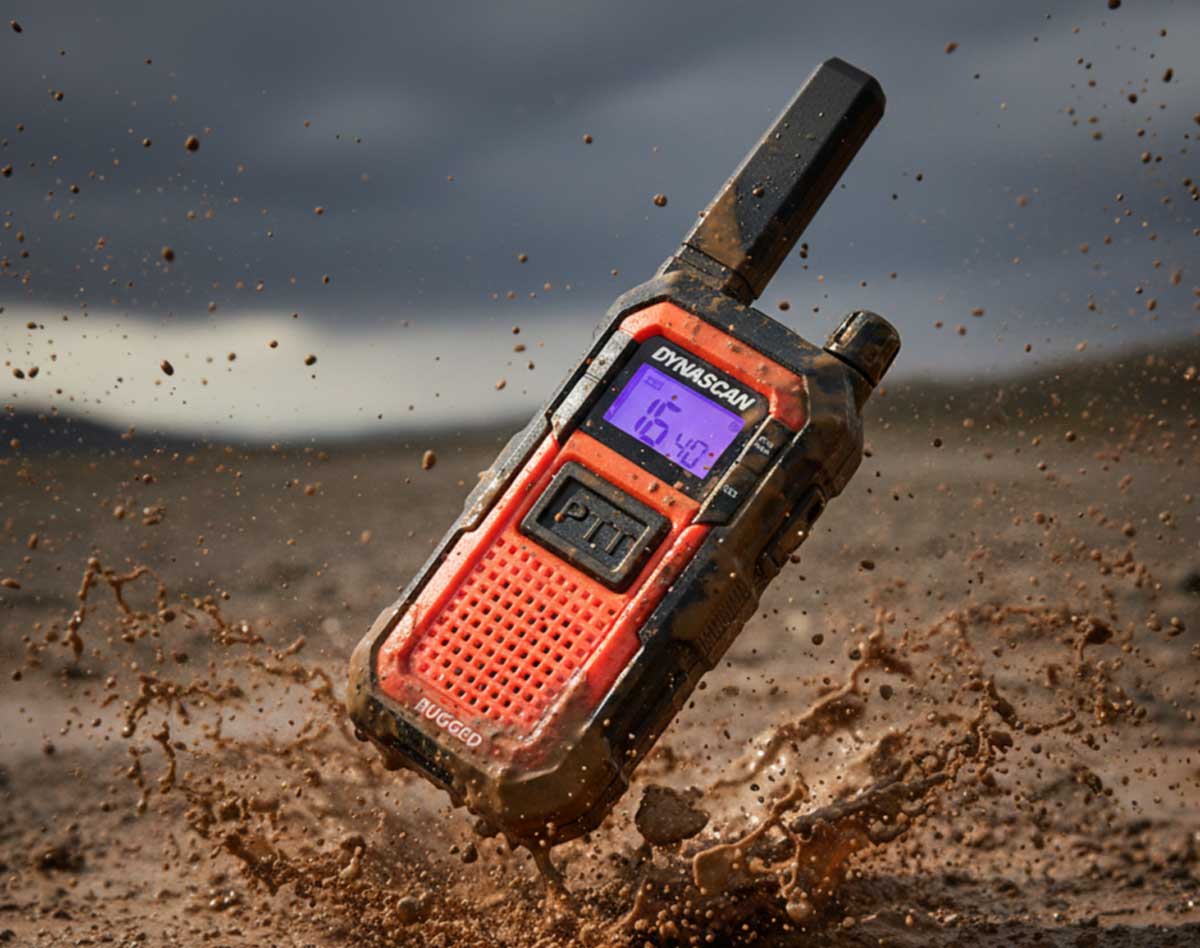
Dynascan RUGGED
9. Not receiving technical advice
Every company has different needs. The number of users, the type of building, distances, obstacles, the nature of the work, and the level of protection required all directly influence the choice of equipment.
A restaurant may need hands-free communication between the kitchen and the dining room. A warehouse may prioritize portability and ease of use. A security team may require greater battery life, durability, and privacy. In aviation, it will be essential to use equipment specifically designed for airband communication.
Having access to expert advice helps you choose the right system, avoid coverage issues, and get the most out of your investment from day one.
10. Buy a walkie-talkie instead of a communication solution
The goal is not simply to purchase a device, but to improve coordination among people.
A radio communication solution must take into account the equipment, accessories, battery life, coverage, work environment, number of users, and the possibility of expanding the system in the future.
Choosing the right walkie-talkie for each industry—whether it’s hospitality, logistics, retail, security, manufacturing, aviation, or events—allows teams to work faster, reduce errors, and increase the efficiency of the entire workforce.
At Dynascan, we develop specialized equipment for various professional environments: compact solutions such as the Dynascan 3A, rugged devices like the Dynascan RUGGED, and models for outdoor activities like the Dynascan F-15, and specialized systems for the hospitality industry such as the Dynascan CHEF-1, and devices with long battery life such as the Dynascan UV-202 , or transceivers the aerial band such as the Dynascan AB-650.
Because making the right choice from the start is the best way to ensure reliable, efficient communications that are tailored to each company's actual needs.