June 15, 2026
Do I need a license to use walkie-talkies? A guide for businesses before purchasing

If your company is considering implementing radio communication systems, one of the first questions you might have is: Do I need a license to use walkie-talkies?
The short answer is: It depends on the type of walkie-talkie you use.
There are basically two types of walkie-talkies in the professional sector: those for unlicensed (known as PMR-446), which can be used freely without any paperwork, and professional walkie-talkies, which require administrative authorization to operate on exclusive private frequencies.
Choosing the right equipment is important, as this will directly affect:
• Coverage and range.
• Communication quality and clarity.
• System reliability and security.
• The future scalability of your business
Radio Frequency Regulations: Are They European or Global?
There is no global regulation governing the use of the radio spectrum; each country has its own regulations, although much of the legislation within Europe is harmonized.
The best-known standard in Europe for free use is the PMR446. This type of equipment can be used without applying for a license or paying fees, provided it strictly complies with certain technical requirements:
• Frequency range: between 446.000 and 446.200 MHz
• Maximum power: 0.5 W
• Antenna: Fixed and non-removable.
• Certification: The device must be certified for use in the EU.
If a radio device exceeds this power limit or allows the antenna to be changed, it is automatically classified as professional equipment and requires a license to operate legally. (Option 2).
Option 1: Walkie-talkies for general use (no license required)
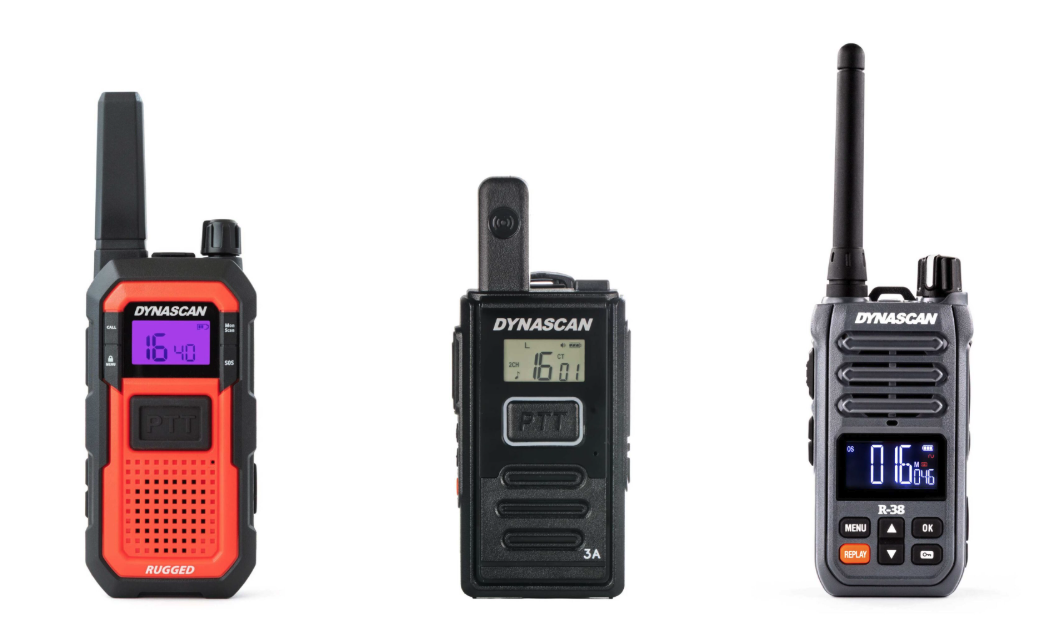
The license-free walkie-talkies are the simplest option on the market: buy, turn on, and use.
They are commonly used in commercial settings that require basic, fast communication over moderate distances.
Benefits
• Low cost:Ideal for sectors such as retail, hospitality, event planning, and small warehouses.
• Immediate implementation:No administrative procedures or waiting periods required.
• Ease of use:Designed for non-technical users; operation is intuitive.
Disadvantages
• Limited coverage: Its 0.5W power output may not be sufficient in buildings with many walls, heavy metal structures, or basements.
• Shared frequencies:There is a risk of interference if other nearby companies use the same channels, although this can be minimized with proper sub-tone programming by a professional.
• Limited scalability: As operations grow and multiple independent workgroups are needed, available channels may become saturated.
Option 2: Professional Walkie-Talkies (Licensed)
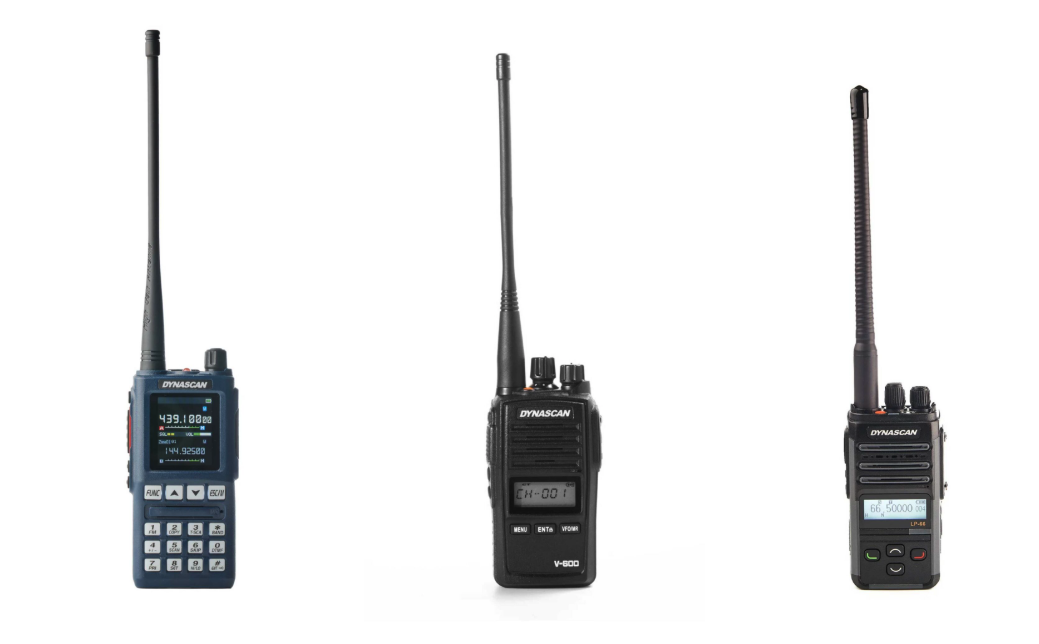
The Licensed walkie-talkies are designed for intensive, industrial, and mission-critical professional use. They require the allocation of an exclusive frequency.
These are the leading systems in sectors such as:
- Private security and surveillance.
- Heavy industry and manufacturing plants.
- Logistics, ports, and airports.
- Construction and Infrastructure.
Advantages
- Greater coverage and range: They offer much more power (up to 4W or 5W for laptops and 25W for cell phones and landlines), better antennas, and the option to install repeaters to cover distances of several kilometers.
- Zero interference: Since you operate on a frequency exclusively assigned to your company, no one else can intercept your communications.
- Advanced features: Particularly in digital technology (DMR), these features enable private calls, the creation of workgroups, telemetry, GPS tracking, and emergency buttons.
Disadvantages
- Higher initial investment: Both the equipment and frequency management involve higher costs.
- Technical complexity: These systems typically require a preliminary coverage study and custom programming by a certified technical provider.
How much does a license cost?
There is no single rate, as the cost depends on the geographic area to be covered, the number of frequencies requested, and the complexity of the installation.
For reference in Spain:
• Initial procedures and application fees: approx. 100–300 €
• Annual spectrum usage fees: approx. 150–1,500 € / year
• Additional infrastructure (repeaters, antennas, installation): from 500 € to several thousand euros
Although the initial investment is higher, in operations where safety, efficiency, and team coordination are critical, the system pays for itself quickly by preventing downtime and accidents.
So, what kind of walkie-talkies should I choose for my business?
The key question you should ask yourself isn't just"Do I need a license?", but **"What level of reliability and criticality does my business activity require?"**
Select "Unlicensed" (PMR-446 type) if your company needs:
- To span short distances or a single open space.
- Handle a small number of concurrent users.
- A purely organizational communication (not safety-critical).
- A low-cost, immediate solution.
Select "Licensed" (professional version) if your company needs:
- A large coverage area (massive industrial buildings, multiple floors, or outdoor areas).
- High reliability with no risk of outages or external interference.
- Divide staff into multiple channels or separate work areas.
- Ensure the safety of staff in the event of an emergency.
In the latter case, it is best to consult a professional in the field to develop a customized radio communication project.
Final recommendation
Before making a purchase decision, we recommend that you carefully analyze these five factors related to your operating environment: the total area to be covered, physical obstacles (concrete, metal), the number of users on staff, the criticality of communication, and future growth needs.
Remember that a company doesn't just buy walkie-talkies; it buys coordination, safety, and continuity in its daily operations.
Do you still have questions about which technology is best suited for your facilities? Our sales team is here to advise you and design the perfect communication solution for your business.