July 17, 2026
The 10 Most Common Mistakes When Buying Walkie-Talkies for a Business
Avoid extra costs, coverage issues, and penalties: We’ll go over the 10 most common mistakes when buying walkie-talkies for businesses and how to choose the right equipment, IP rating, battery life, and accessories for your industry.

When a company decides to implement a two-way radio system, it’s common to focus solely on the price or the power of the device. However, choosing the right two-way radio involves much more than that: the industry, the physical environment, and day-to-day operations make the difference between a profitable investment and a constant source of problems.
Here are the 10 most common mistakes when buying walkie-talkies for a business and the technical tips for avoiding them from day one.
1. Choose the same equipment for any sector
Not all companies operate under the same conditions. A restaurant, a logistics warehouse, a security service, or an airport all have completely different operational requirements.
- Hospitality and Food Service: Solutions are needed that allow for communication without interrupting service. Equipment such as the Dynascan CHEF-1, with a base station and hands-free foot pedal, streamline coordination between the kitchen and dining room quickly and hygienically.
- Commerce, retail, and warehouses: The priority is usually to have lightweight, unobtrusive, and highly intuitive terminals, such as the Dynascan 3A.
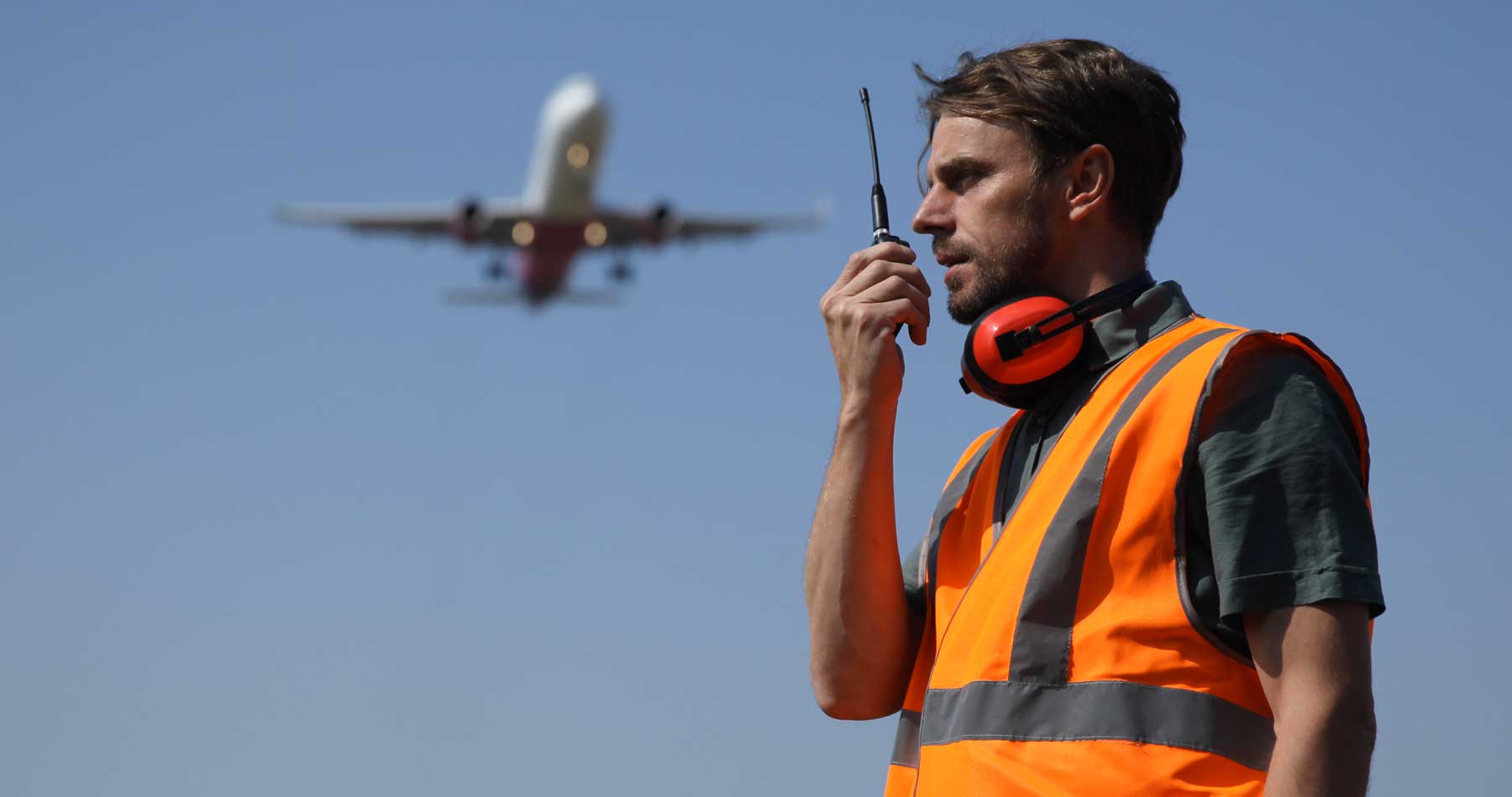
- Aviation and airport operations: Certified transceivers are required for operation in the aviation band, such as the Dynascan AB-650, which is designed for ground personnel and aviation environments.
2. Failing to value the work environment
A walkie-talkie that works flawlessly in an office may stop working within a few days on a construction site, in a factory, or in a cold storage room. Before deciding to buy one, it’s a good idea to evaluate five environmental factors:
- Will you be exposed to airborne dust or sawdust?
- Will there be rain, constant humidity, or splashes?
- Is there a frequent risk of bumps or falls on concrete?
- Will it be handled with protective gloves?
- Will it be used outdoors or in adverse weather conditions?
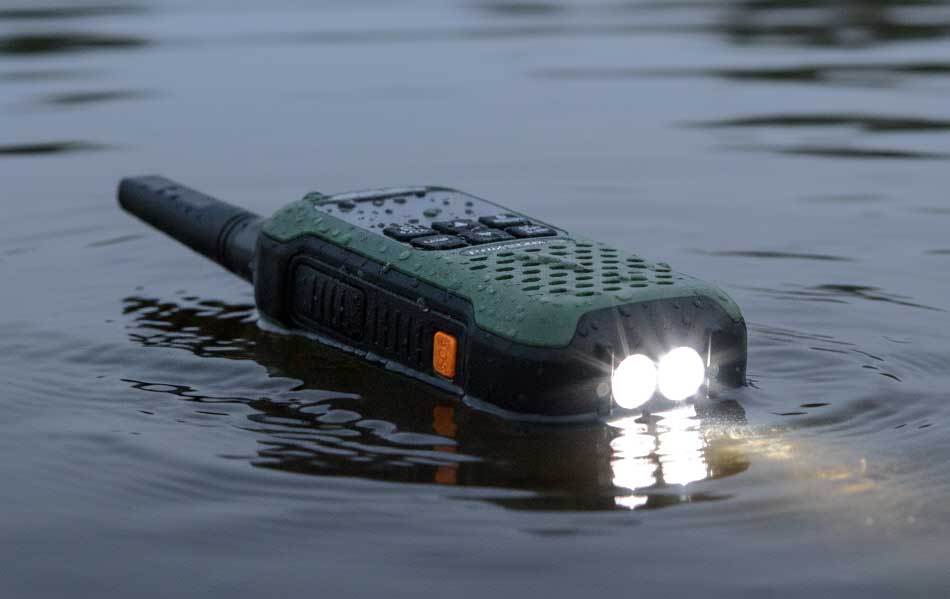
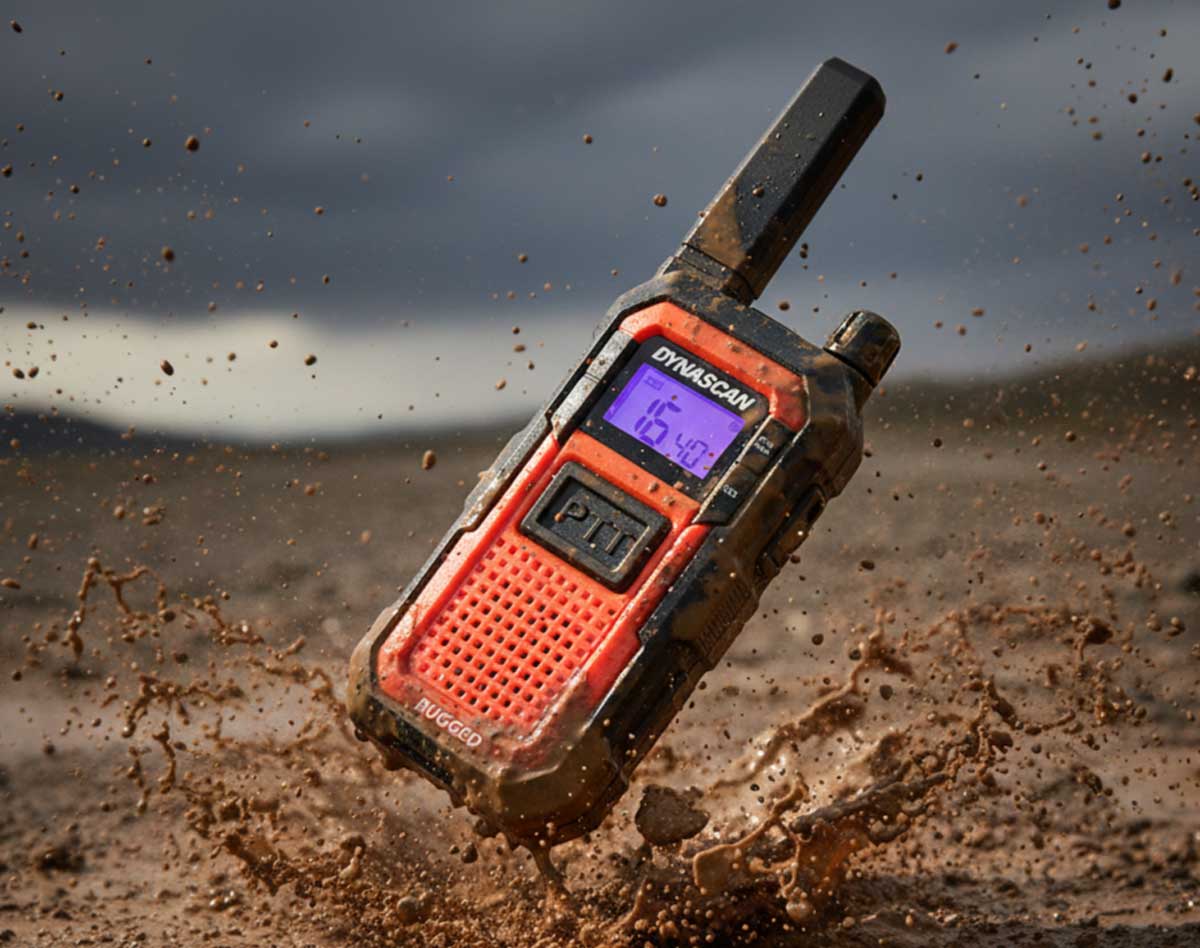
In industrial or construction environments, it is essential to choose equipment with IP67 certification against dust and water, such as the Dynascan RUGGED. For work in aquatic environments, ports, or mountain activities, the Dynascan F-15 offers added buoyancy and an SOS emergency button.
3. Thinking that more power always means better coverage
One of the most common misconceptions is assuming that a device with more watts will always guarantee greater range. In practice, actual coverage depends on the terrain, concrete walls, metal structures, industrial shelving, and the operating frequency (VHF vs. UHF).
In many workplaces, an license-free PMR446 system offers flawless coverage without any red tape. When you need to cover long distances, multiple underground floors, or install repeaters, the right solution is professional, licensed two-way radios.
4. Forget about accessories and multiple charges
Accessories determine the comfort and productivity of the workforce: discreet micro-earpieces, remote lapel microphones, cases, spare batteries, or hands-free systems such as the Dynascan CHEF-1.
Charging logistics are equally critical. When a company manages multiple terminals per shift, using a 6-bay charger —such as the Jetfon Multi-CLPe for Motorola CLPe fleets—centralizes charging, saves on outlets, and ensures that all devices are operational at the start of the workday.

5. Not calculating the actual range per shift
Running out of battery power in the middle of a shift disrupts team coordination. It’s a good idea to choose a battery capacity (mAh) based on shift length, enable power-saving modes, and consider charging directly via USB-C or using additional interchangeable batteries.
During busy periods involving security, logistics, or events, high-capacity models such as the Dynascan UV-202 can operate for up to 20 hours on a single charge, covering full shifts without interruption.
6. Buying solely based on price (and ignoring certification)
The cheapest device often ends up costing more when batteries degrade after just a few months, the casing is fragile, or replacement parts are unavailable. Furthermore, purchasing equipment without European CE certification or that is programmed outside authorized frequencies and power levels can cause interference with critical services and result in administrative penalties for the company.
7. Failing to plan for workforce growth
Many companies start out with four or five units, and within a few months they need to double their fleet or divide their staff into departments. Choosing a scalable professional-grade system with configurable channels and sub-tones avoids the need to replace the initial equipment when expanding the system.
8. Failing to check compatibility with current equipment
Before adding new units, you should verify that they operate on the same band, channel, and CTCSS/DCS tones as your existing walkie-talkies. In the PMR446 standard, solutions such as the Dynascan CHEF-1 integrate directly with any approved PMR446 walkie-talkie used by control rooms, maintenance, or for events. It’s also a good idea to check the compatibility of audio connectors (such as the 2-pin Kenwood type, etc.) and chargers.
9. Do without specialized technical advice
The size of the facility, the thickness of the walls, ambient noise, and the need for privacy all determine which frequency and terminal type will work best. Getting technical advice beforehand helps avoid unsuccessful purchases and ensures coverage from day one.
10. Buy individual devices instead of a comprehensive solution
A company's goal is not to purchase devices, but to ensure smooth, secure, and continuous communication among its team. Having certified devices, ergonomic accessories, appropriate chargers, and after-sales technical support makes all the difference.
At Dynascan, we develop solutions tailored to each professional environment: compact equipment such as the Dynascan 3A, ultra-rugged IP67 models such as the Dynascan RUGGED, and submersible walkie-talkies like the Dynascan F-15, hands-free systems for the hospitality industry such as the Dynascan CHEF-1 , or aerial band transceivers such as the Dynascan AB-650.
Would you like us to help you set up the ideal communications fleet for your company? Contact our technical team at info@dynascanradio.com, call us at +34 933 348 800, or send us a message through our contact page.