May 5, 2025
The value of professional communications in critical situations
The power outage on April 28, 2025, left millions of people without electricity, internet, or cell service. Find out why professional walkie-talkies are the only way to ensure immediate and independent communication when conventional networks fail.

On April 28, 2025, the Iberian Peninsula suffered the most severe power outage in its recent history. The sudden outage at 12:33 p.m. left Spain and Portugal without power due to a 15-gigawatt drop in just five seconds.
This incident brought rail service to a standstill, disrupted air traffic, and knocked critical infrastructure—such as traffic lights, ATMs, and data networks—out of service. Within minutes, standard systems—cellular networks, fiber optics, 4G/5G data, and email—became overloaded or completely inoperable. For thousands of companies, it was a stark reminder of just how vulnerable their operations are when they rely exclusively on external infrastructure.
In the event of a network outage, having a self-contained communications system—one that is independent of the power grid and the internet—is no longer a secondary option but has become the cornerstone of any business continuity plan.
Why are professional walkie-talkies essential in emergencies?
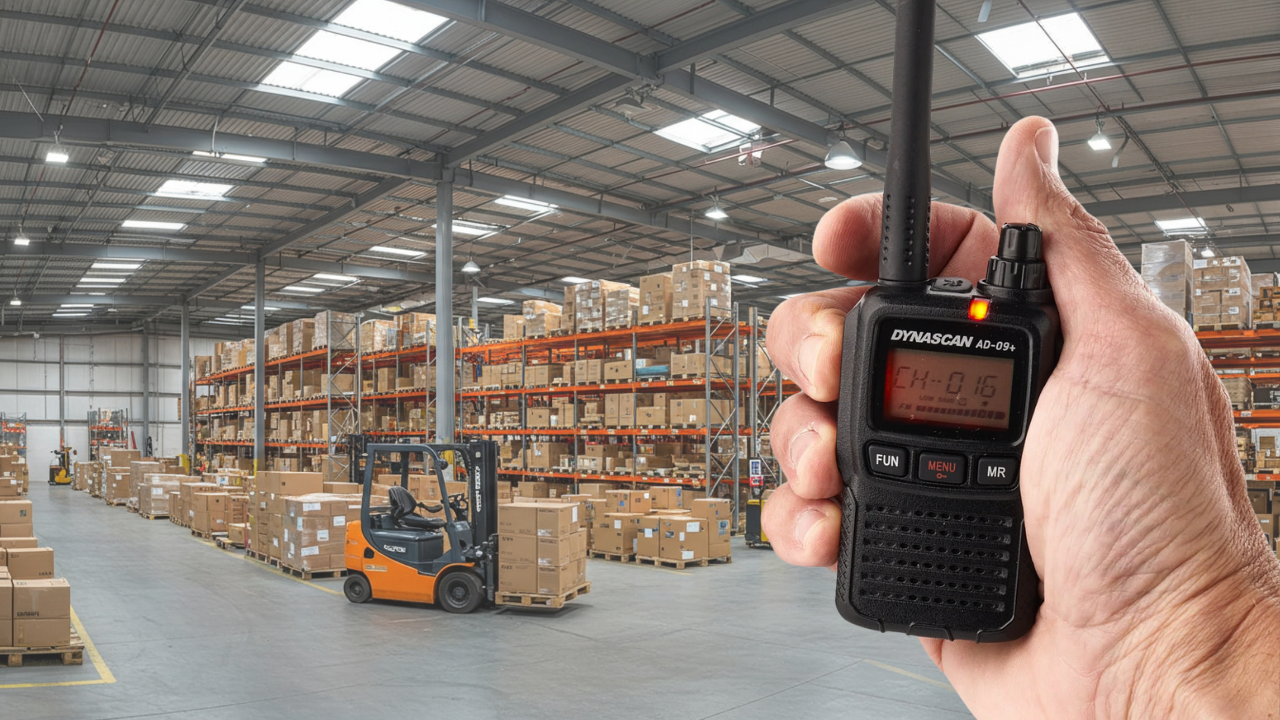
Unlike cell phones or IP-based messaging apps, two-way radio transceivers establish direct point-to-point connections without relying on commercial carriers' repeater antennas or cloud servers:
- Instant Communication (Push-to-Talk): Teams can communicate instantly with the push of a button, eliminating dial-up times and the usual overload of cell phone lines during an emergency.
- Complete independence from mobile networks and the Internet: They operate autonomously via radio frequency (UHF or VHF) and continue to function normally even during total fiber or telephone outages.
- Extended battery life: Professional walkie-talkies feature high-capacity lithium-ion (Li-Ion) batteries capable of providing between 12 and 18 hours of continuous use, and they also support interchangeable spare batteries or charging via multiple charging stations and vehicle power outlets.
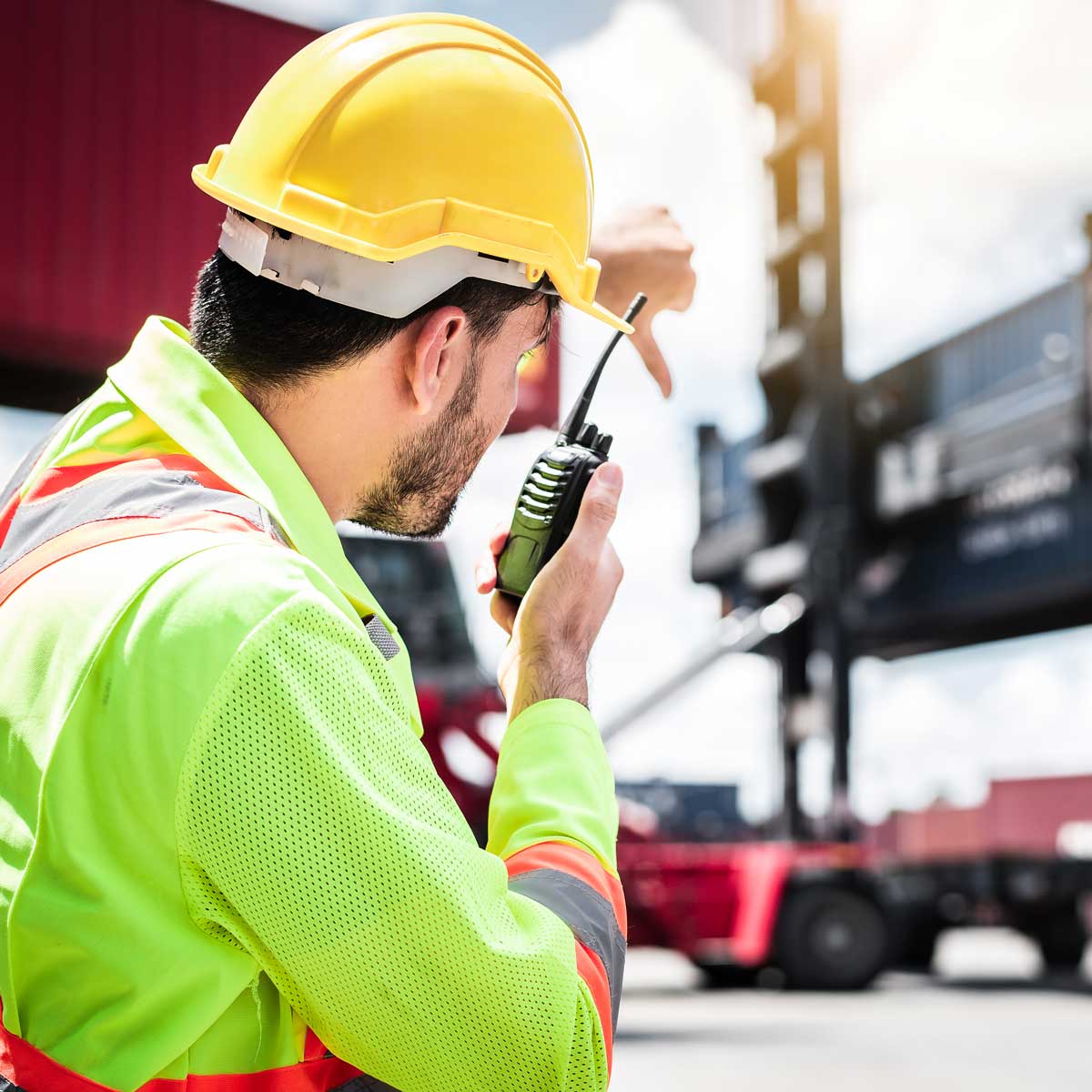
- Effective operational coordination: They enable the creation of task forces organized by dedicated channels (security, maintenance, logistics, or management) to prevent operational delays and coordinate evacuations or critical maneuvers without interference.
How to Choose the Right Radio Equipment Based on Your Contingency Plan
Not all facilities have the same coverage or environmental resistance requirements. Before equipping a facility with backup equipment, it is important to evaluate three key technical factors:
1. Unlicensed PMR-446 equipment vs. licensed VHF/UHF equipment
For logistics facilities, hotels, shopping centers, or corporate buildings, professional license-free PMR-446 walkie-talkies (UHF 446 MHz band, 0.5 W power) offer immediate deployment without administrative procedures and feature CTCSS/DCS sub-tones to filter out interference. In contrast, for large industrial complexes, transportation fleets, or environments with severe obstacles, licensed professional VHF/UHF equipment (up to 5 W of power) ensures greater range and penetration.
2. Mechanical Strength and Environmental Protection (IP67)
In critical situations—such as storms, floods, or overnight power outages at the plant—the terminals must withstand drops, dust, and moisture. Ruggedized models such as the Dynascan V-600 or devices in the PMR-446 rugged professional series feature shock-resistant metal chassis and IP67 certification, ensuring they continue to function even after accidental immersion in water.
3. Maintenance and Preventive Charging Protocol
Emergency equipment is only reliable if it is ready when an incident occurs. It is recommended to keep spare batteries charged, conduct periodic channel tests between shifts, and centralize charging using multi-port chargers at critical control points.
Dynascan Solutions for Critical Sectors
From Dynascan , we develop comprehensive lines of professional radio communication systems designed to ensure the continued operation of companies in the industrial and logistics sectors, as well as those in surveillance and security, event management, hospitality, and retail, in the event of any power or network outage.
Is your company prepared to keep its teams connected if the network goes down again? If you need technical advice on sizing a backup fleet or choosing between PMR-446, analog, or digital DMR systems, contact our technical team.