
June 15, 2026
Do I need a license to use walkie-talkies? A guide for businesses before purchasing
Before making a purchase, determine whether your company needs unlicensed PMR446 walkie-talkies or licensed professional equipment: European regulations, range, interference, approximate costs in Spain, and selection criteria.

If your company is considering implementing radio communications, the first question that usually comes to mind is: Do I need a license to use walkie-talkies in my business?
The answer depends on the type of equipment and your operational requirements. In the business world, there are two main categories: license-free walkie-talkies (PMR446), which are ready to use without any administrative procedures, and licensed professional walkie-talkies, which operate on exclusive private frequencies under government authorization.
Choosing the right option between the two will determine four key factors in your company's day-to-day operations:
- The coverage and actual range within your facility.
- Audio clarity and the absence of external interference.
- The reliability and operational safety of the equipment.
- The fleet's capacity for future expansion.
Radio Frequency Regulations: European PMR446 Standard
Regulation of the radio spectrum falls under the jurisdiction of each country’s telecommunications authority, although within the European Union, unlicensed use is harmonized under the PMR446 standard (Personal Mobile Radio, 446 MHz). Any company or individual may use this equipment without applying for a license or paying fees, provided they strictly comply with these four technical requirements:
- Frequency range: between 446.000 and 446.200 MHz (analog and digital dPMR446).
- Maximum radiated power (ERP): 0.5 W (500 mW).
- Antenna: built-in and fixed; cannot be removed or replaced.
- Certification: CE marking and approval in accordance with the European RED Directive.
If a transceiver exceeds 0.5 W of power, operates outside the 446 MHz band, or has a detachable antenna, it is considered professional equipment subject to an administrative license.
Option 1: Walkie-talkies for general use (PMR446, license-free)
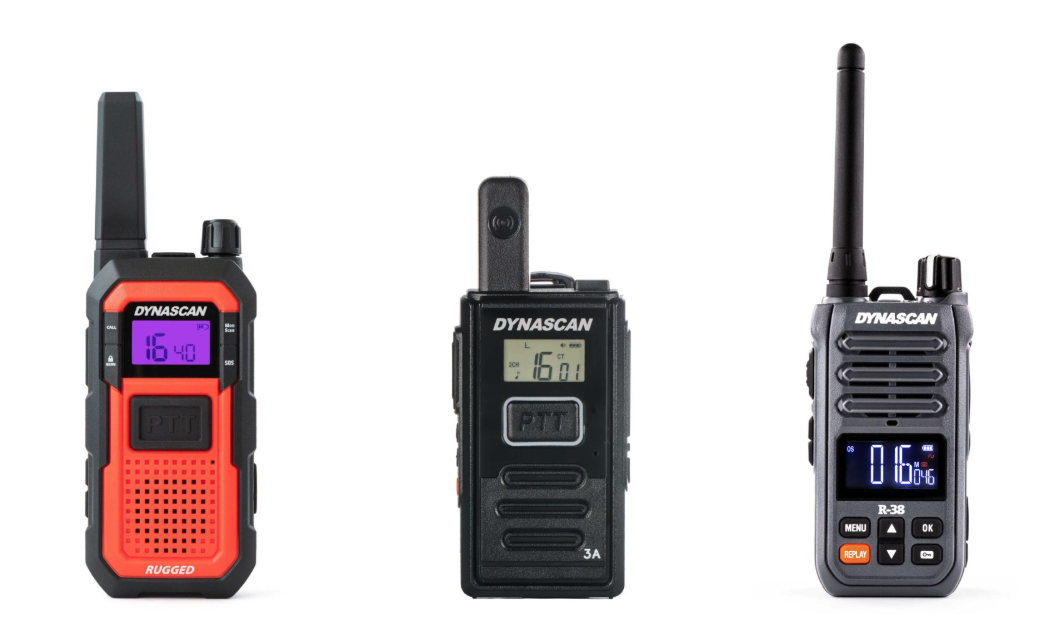
The license-free walkie-talkies are the quickest way to start communicating right away: just unpack them, turn them on to the same channel, and start talking.
Advantages of PMR446 Equipment
- Low cost: a very modest investment for retail businesses, restaurants, hotels, events, or small warehouses.
- Immediate implementation: no administrative paperwork or waiting for approval.
- Intuitive operation: ideal for rotating staff or non-technical personnel.
Limitations to Keep in Mind
- Limited coverage: The 0.5 W of power may not be sufficient in large-area facilities, multi-story buildings with reinforced concrete, or basements.
- Shared frequencies: Since these are public channels, interference may occur if other nearby companies operate on the same frequency, although programming with CTCSS/DCS sub-tones reduces this interference.
- Limited scalability: If the company grows and needs numerous independent workgroups, the available channels may become overloaded.
Option 2: Licensed professional walkie-talkies
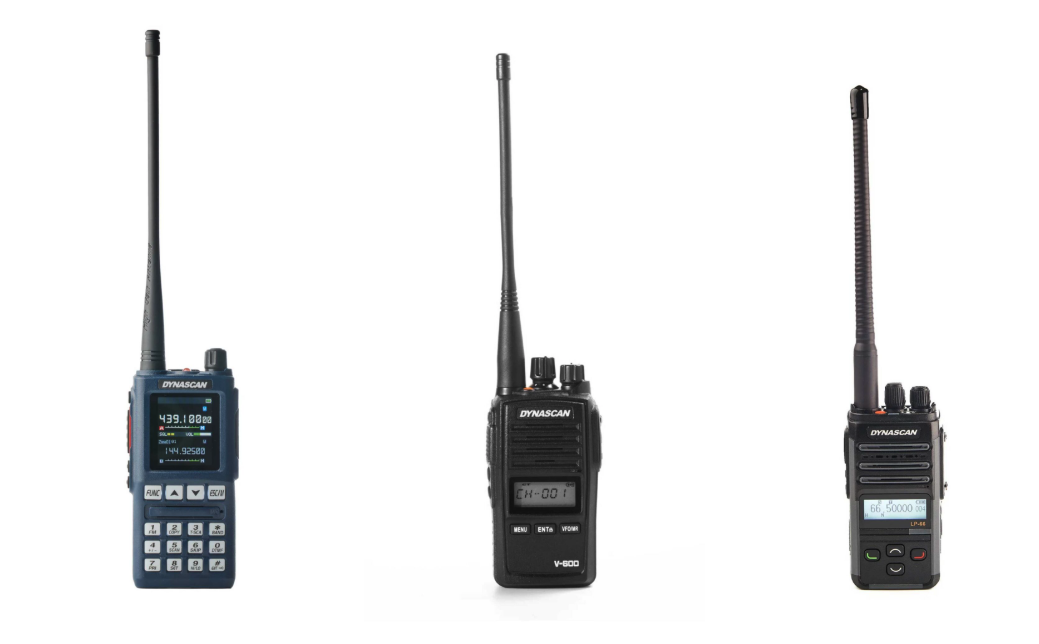
The licensed walkie-talkies are designed for industrial, logistics, or security environments where communication cannot fail. They operate on private frequencies (VHF or UHF) assigned exclusively to your company.
They are the standard in industries such as:
- Private security, surveillance, and access control.
- Heavy industry, chemical plants, and factories.
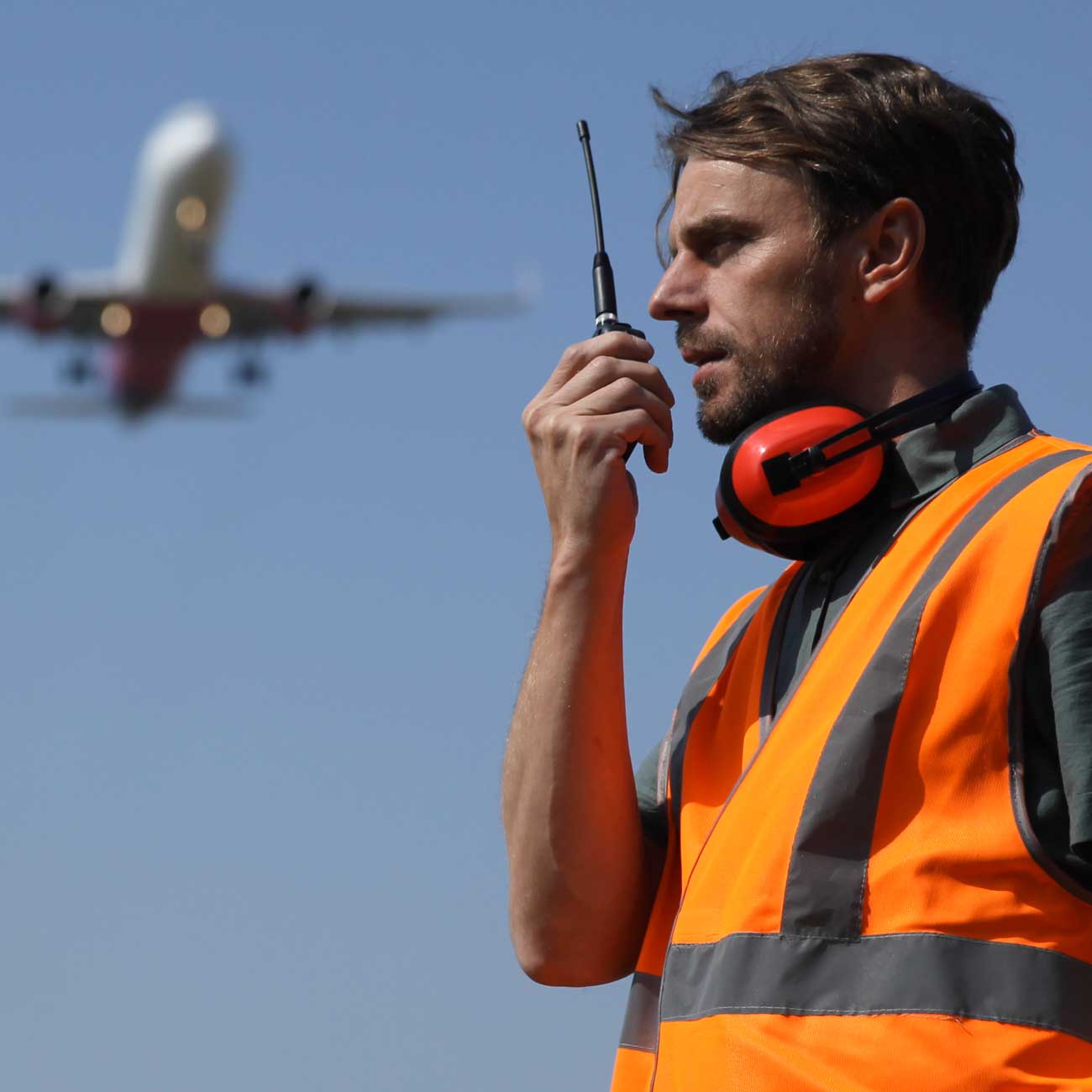
- Logistics centers, ports, and airports.
- Civil engineering, construction, and infrastructure.
Advantages of Licensed Equipment
- Greater range and penetration: power up to 4 W or 5 W in laptops (and up to 25 W in mobile transceivers ), higher-performance antennas, and the option to install repeaters to cover kilometers or multiple underground levels.
- Private, interference-free channel: Because you have an exclusively assigned frequency, no external users can interfere with your communications.
- Advanced features (analog and digital DMR): individual calls, department-specific closed groups, GPS tracking, messaging, and an emergency button (Man Down / lone worker).
Points to Consider
- Higher initial investment: Both the terminals and the frequency licensing process require a larger budget.
- Technical specifications: These require a coverage study and custom programming by a specialized distributor.
How much does a radio license for businesses cost in Spain?
The exact amount depends on the geographic coverage area (local, provincial, or national), the number of frequencies, and whether repeaters are installed. As a general guideline in Spain:
- Initial processing and administrative application: approximately €100 to €300.
- Annual radio spectrum reservation fee: between €150 and €1,500 per year, depending on coverage and channels.
- Additional infrastructure (if repeaters or fixed antennas are required): starting at €500, depending on the project.
Quick Comparison: Unlicensed vs. Licensed
| Criterion | Unlicensed (PMR446) | Licensed (VHF / UHF / DMR) |
|---|---|---|
| Procedures and Fees | None (free use in the EU) | Administrative Authorization and Annual Fee |
| Maximum power | 0,5 W | Up to 4–5 W in laptops (25 W in vehicles) |
| Frequency | Shared (446.0–446.2 MHz) | Private and exclusive to the company |
| Installation of Repeaters | Not allowed | Yes, it allows you to extend coverage to multiple floors or kilometers |
| Ideal Sectors | Retail, hospitality, events, offices, small warehouses | Manufacturing, logistics, security, construction, large venues |
So, what kind of walkie-talkies should you choose for your business?
The key question is not simply “Do I need a license?” but “What level of coverage, privacy, and reliability does my company’s business require?”
Choose license-free walkie-talkies (PMR446) if your company needs:
- To span short distances or an open space without large metal barriers.
- Coordinate small groups of users in an agile manner.
- Daily operational communication in which an occasional interruption does not compromise security.
- Immediate launch on a tight budget.
Choose licensed (professional) walkie-talkies if your company needs:
- Guaranteed coverage in large warehouses, multi-story buildings, basements, or large outdoor areas.
- Private communications free from external interference.
- Divide the template into multiple channels or simultaneous workgroups.
- Workplace Safety Procedures and Emergency Protocols.
Final Recommendation Before You Buy
Before finalizing your order, evaluate five specific factors related to your facility: the total area to be covered, structural obstacles (concrete, metal shelving, cold storage rooms), the number of simultaneous users, the level of security criticality, and plans for expansion in the medium term.

Would you like us to review your company's floor plan or coverage needs so we can recommend the right equipment for you? Contact our technical team at info@dynascanradio.com, call us at +34 933 348 800, or send us a message through our contact page.
